The Substance: The Magic of Repulsive Womanhood

If you haven’t heard, The Substance (2024) is a revelatory film, intimately connecting us with the silent and self-inflicted savagery behind a femininity sculpted to appear pristine; devoid of flaws, pain, or madness. Coralie Fargeat doesn’t give us no-bush, no-blood femininity. She gives us a broken toe in a ballet slipper. Molars removed to accentuate the cheekbones. Silicone buried under muscle. And poison injected between the eyes.

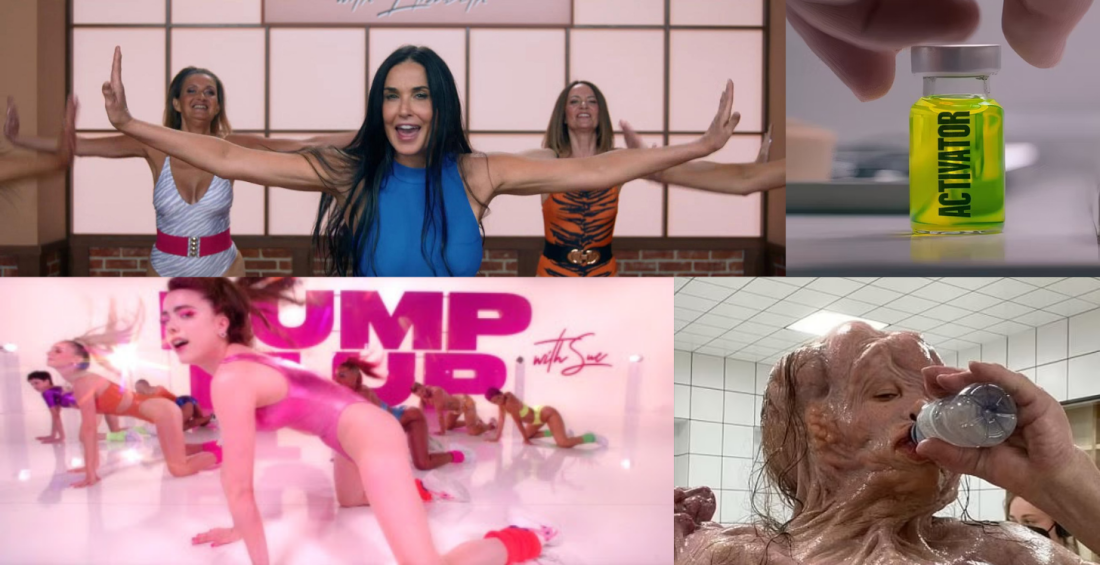
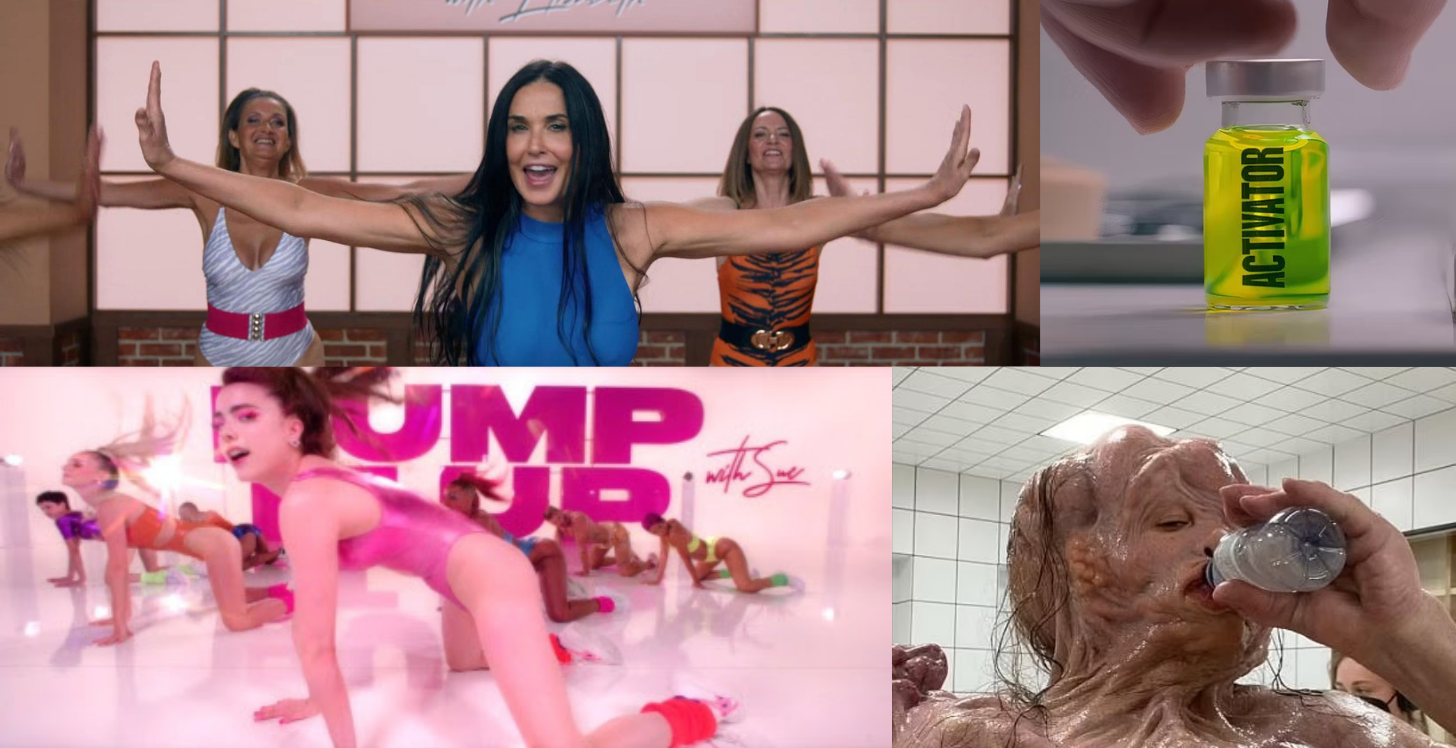
The plot follows Elisabeth Sparkle (Demi Moore), a Jane Fonda–esque aerobics instructor who is fired for committing the crime of turning 50, discarded by an industry that equates desirability with youth and treats aging as failure. In a desperate attempt to regain relevance, she turns to a black-market treatment known only as “the substance,” which promises to transform her into a younger, hotter version of herself, one who can re-enter Hollywood on acceptable terms.

Enter Sue (Margaret Qualley), Elisabeth’s newly generated other self: vibrant, elastic, entitled, hyper-visible. The catch is strict and clinical: the two must alternate existence on a rigid schedule, sharing one body across time. One lives while the other disappears. Balance, says the mysterious purveyor of this toxic-waste-coded serum, is survival. But balance cannot hold.
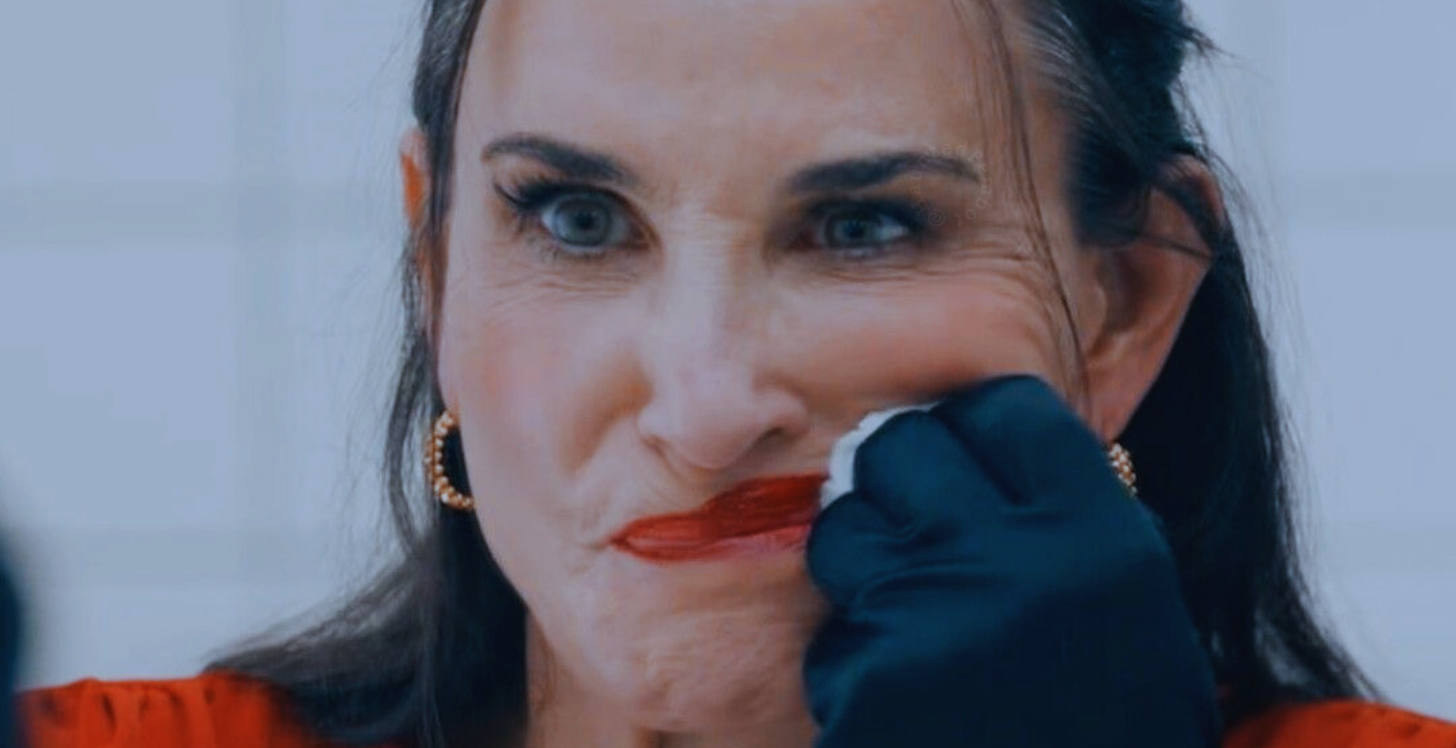
Through Elisabeth’s experience, we enter a Hell where fame is love, and love is death and we understand it because we live there too. To be a woman is to deal internally with the grotesque, the messy, the unspoken violence of making oneself desirable. It is to see the body as meat: trimmed, chopped, and pounded for the consumption of others. Ain’t nothing demure about it.

So many moments of self-loathing are experienced alone. They are decidedly forgotten, pushed into the dark.
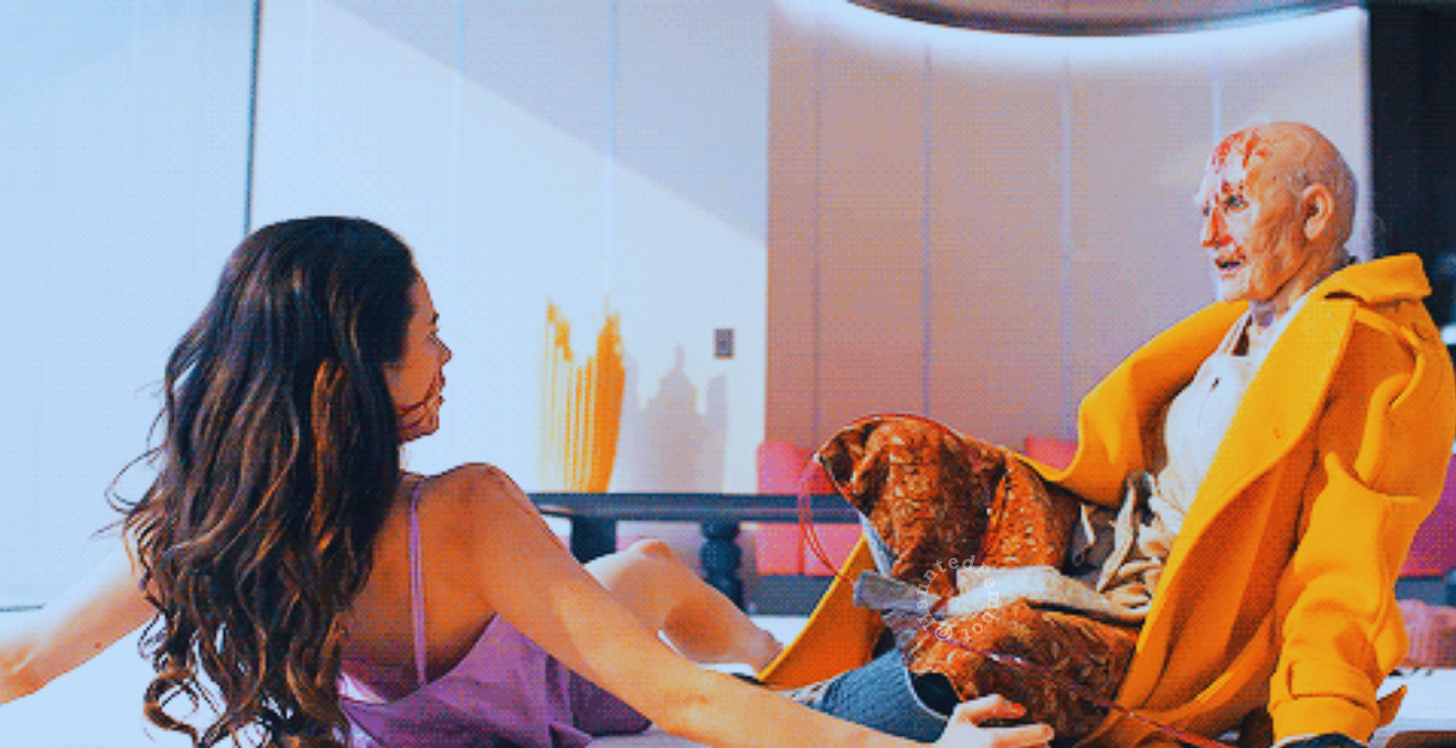
Fargeat’s film says, “No. You must look. You must know yourself.”

I found myself saying, “I guess that’s self-hatred too,” again and again as the film peeled back layer after layer of woman’s artifice, revealing the compulsions we normalize and the quiet negotiations we make with our own bodies.
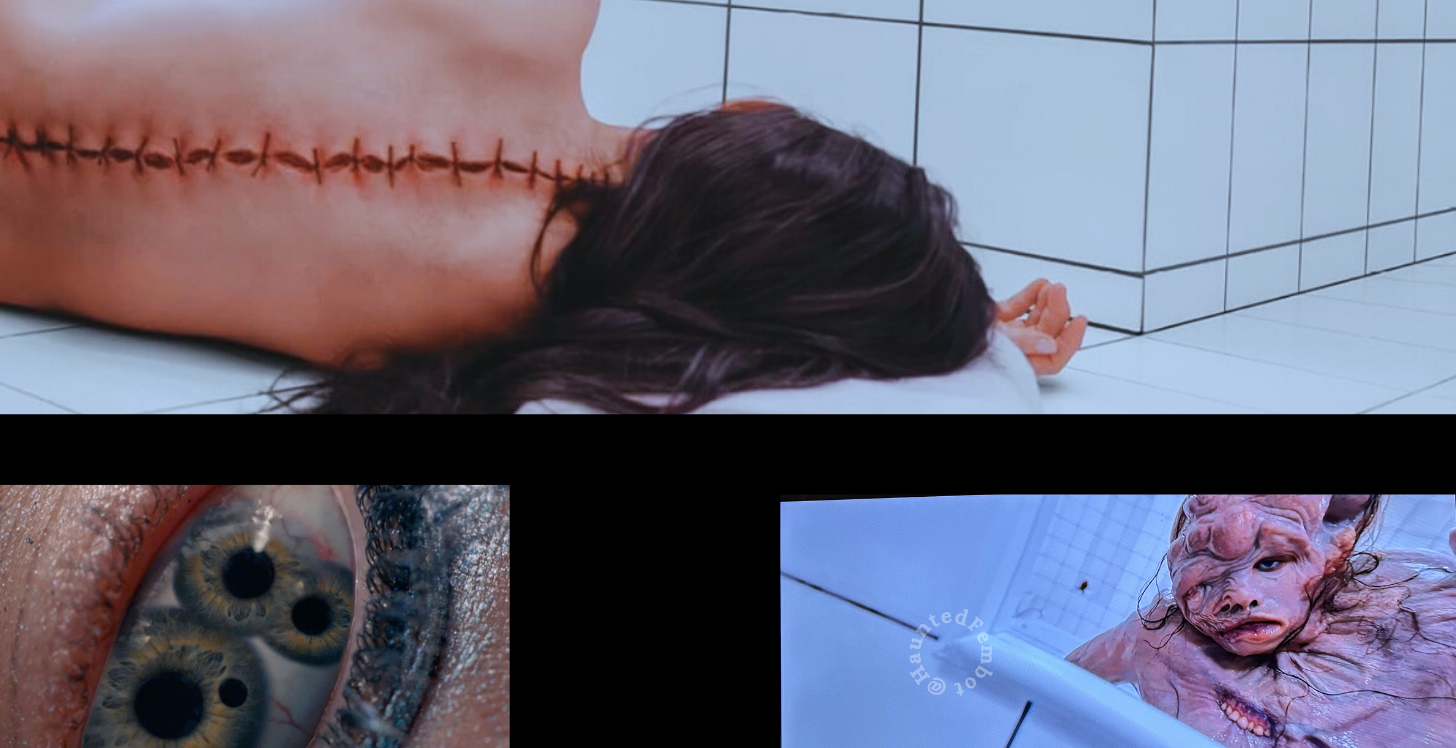
Campy, over-the-top, and told in the language of dreams, The Substance feeds us an important message with a spoonful of “oh my gawd, what am I even watching?! Did that face vagina just birth a titty?!” — it will change you.

This is not a movie. This is a spell.
Pretty Lethal Review: Came for Black Swan, Got Sailor Moon on Steroids

If you go into Vicky  Jewson’s Pretty  Lethal (2026) expecting arthouse, ballerina body horror, you’re setting yourself up for disappointment. Lovingly dubbed “Die Hard  in  tutus” by Jewson herself, the film is less about the physical and psychological toll of perfectionism than it is about girl power, gushing neck wounds, and god-tier calf muscles.

The story follows a troupe of ballet dancers, each with her own archetypal, Spice Girl–coded persona: Bones (Maddie Ziegler), the street‑smart runaway; Princess (Lana Condor), the spoiled rich girl; Grace (Avantika), the God‑fearing overachiever; Chloe (Millicent Simmonds), the boy‑crazy seductress; and Zoe (Iris Apatow), the protective older sister.

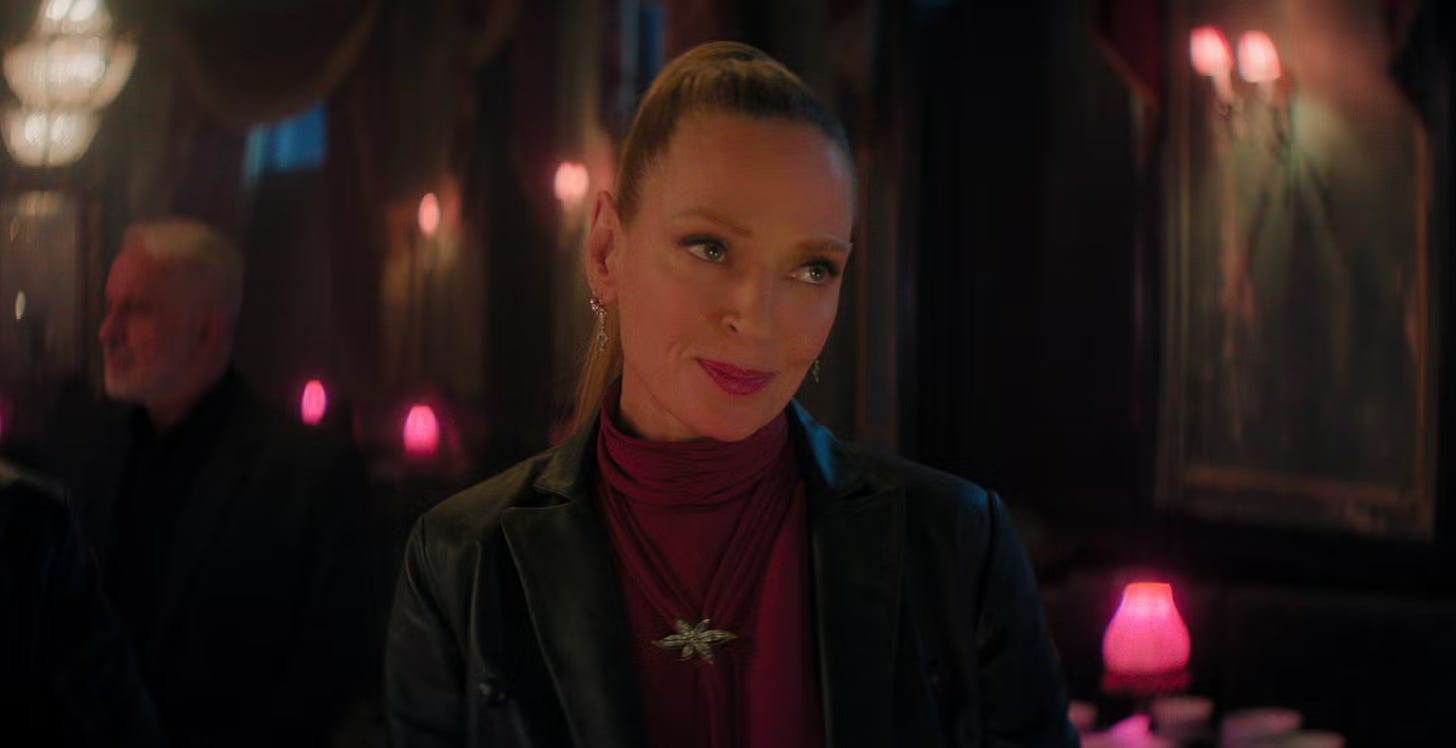
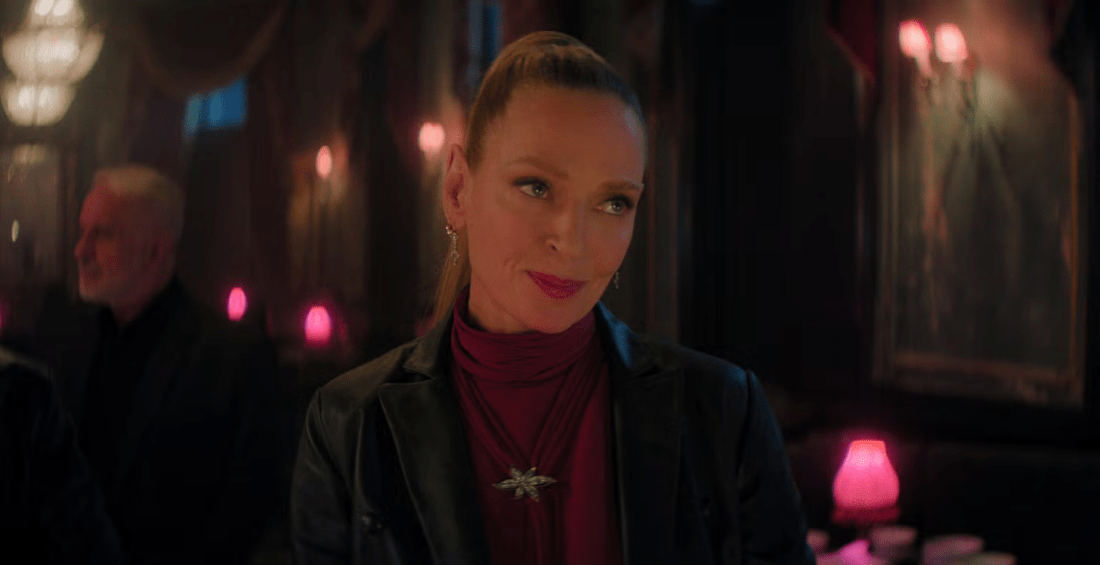
The girls are traveling from Los  Angeles to Budapest for an elite international competition under the guidance of their tightly wound instructor, Miss Thorna (Lydia Leonard). When their bus breaks down somewhere in the Hungarian countryside, they seek refuge in a nearby gothic inn with colorful victorian interiors that feel lifted from Disneyland’s Haunted Mansion ride. They receive a hospitable welcome from the innkeeper Devora, a former ballet prodigy whose cold exterior and unnaturally tight ponytail tell us she is not to be fucked with.

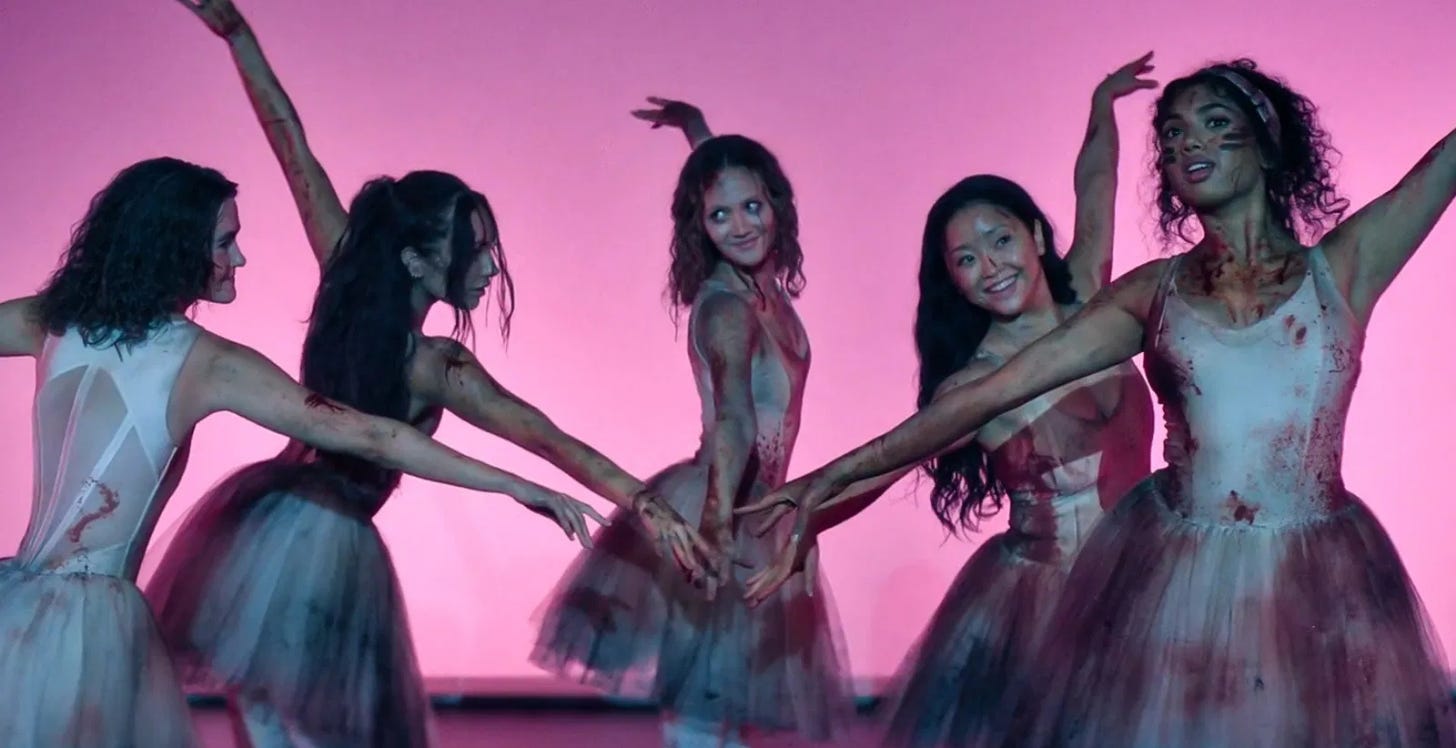
When the inn’s resident pianist plays Tchaikovsky’s Nutcracker  Suite, the girls take to the stage to rehearse their choreographyAs the music swells, Miss  Thorna (Lydia Leonard), does some nutcracking of her own, delivering a swift kick to the ball sack of a pervert who gets a little too handsy at the bar. Before we know it, Thorna’s got a bullet in her head, and her company of ballerinas is running through the halls Scooby Doo-style with Devora’s goons following close behind. This is when the mayhem begins. Banding together in a fight for survival, the girls use their dance moves as combat maneuvers: leaps and lifts are offensive tackles; extensions and kicks are nose-cracking blows, and distressed point shoes are deadly weapons.

I’ll be the first to say this movie is not for everyone. It isn’t going to change lives, and you can almost feel the generational imprint of screenwriter  Kate  Freund, whose ham sandwich of a script brims with cringey gems like “that toe blade is sick. I must have one” and “What kind of ballerina doesn’t want to make themselves throw up?” — I didn’t have to Google her to know we were born within a year of each other and could both perform the dance sequence from Sister Act II (1993) from memory without missing a beat. But from where I’m sitting, the movie thrives in its millennial camp sensibilities. Unashamed, referential, and earnest in its excess, it meets all the classic hallmarks of an over‑the‑top action flick: ticking time bombs, improbable gadgetry, a  shadowy Eastern European crime ring, and a  final showdown that ends, naturally, in ballet formation.

Still, its critical reception is mixed. Some reviewers praised its commitment to female empowerment and kinetic choreography, others denounced it as a missed opportunity, others call it shallow but “fun.”

*You can see the full spread of opinion in Phantasmag’s positive review, Dread Central’s mixed take, and Roger Ebert dot com’s negative write‑up.

It’s true that poignant commentary on the bloody realities of girlhood are better left to cult darlings of the ballerina genre (Black Swan (2010), The Red Shoes (1948), and Suspiria (1977 & 2018) come to mind). This is a popcorn movie through and through. It’s about screaming, laughing, and singing along to remixes of 90s club hits like “Rhythm is a Dancer” as prima ballerinas take up arms and bludgeon henchmen with toe-blade point shoes, and there’s nothing wrong with that.

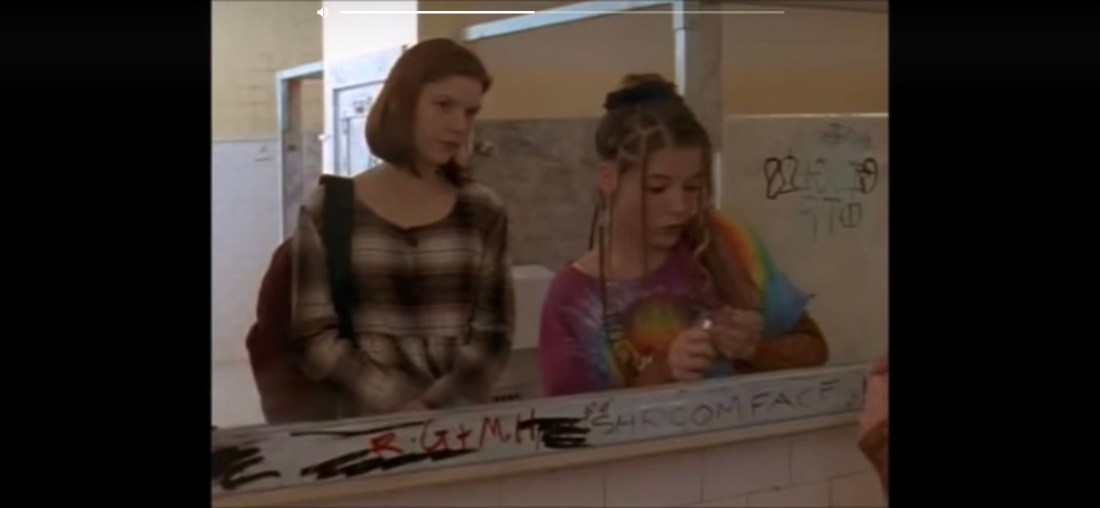
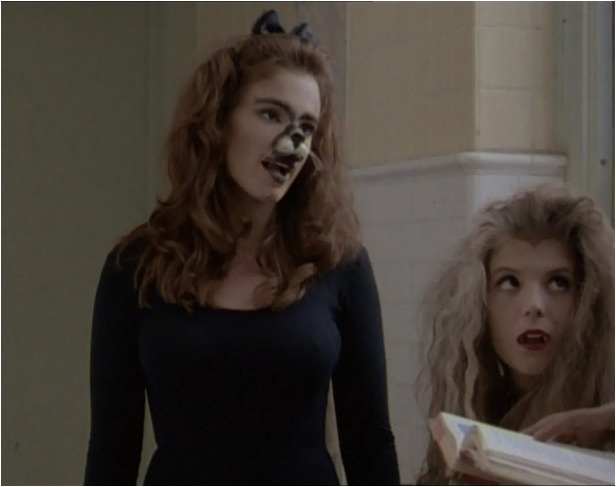
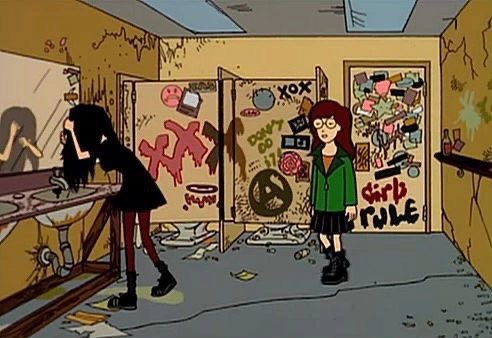
A Love Letter to the Girl’s Room

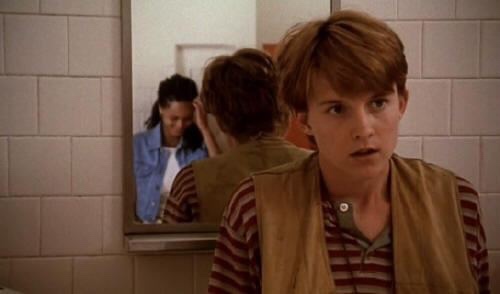
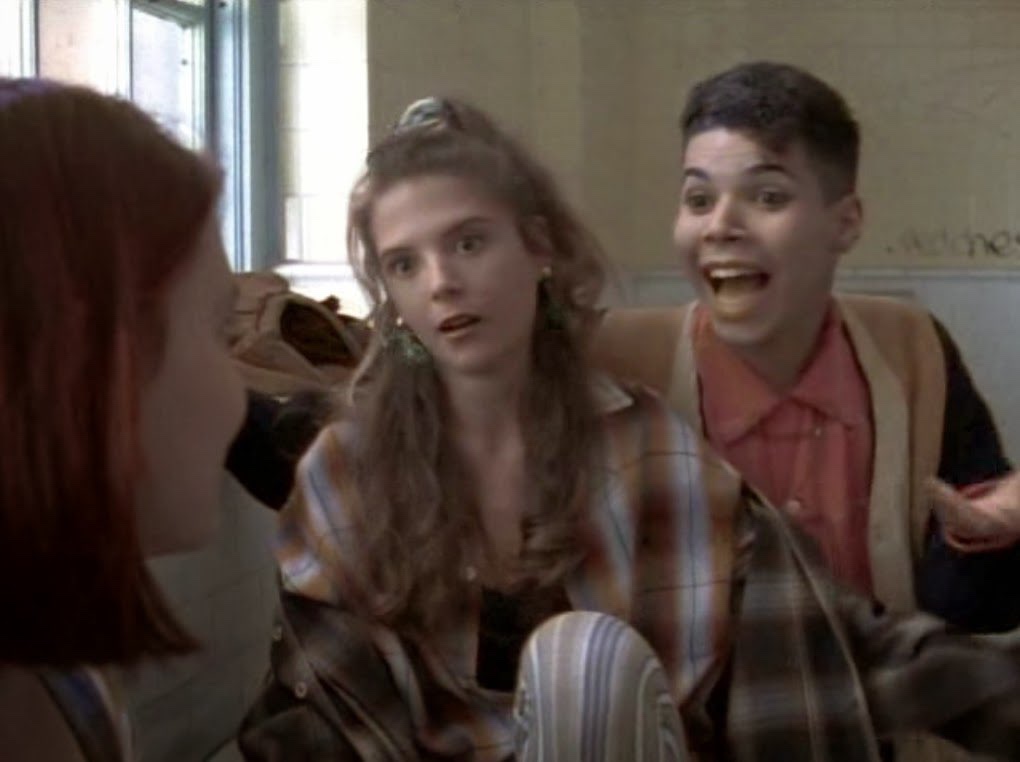
The girl’s bathroom is a special and sacred place for 90s Alt femmes.

Lipstick and mascara happen there.
First Kisses.
Crying and comforting.
Secret smoking.

Enemies become friends following the shared humiliation of a surprise blood stain and the charity of a tampon.

There are sticky zippers, broken bra straps, empowering words from a stranger who also missed that tricky spot where calf turns to knee

Love.
Forbidden handholding.
Secrets passed through psychic eye contact

Motherhood, childhood, brotherhood, and sisterhood between friends.
There is Throwing up.
Hair holding.
Breastfeeding.
Helping.
Empathy.

It is a place where we are human.
An inclusive space.

One for coexistence
Unofficially.
One for queer people.
For sick people.
For Best Friends.

So, anyway,
STFU, J.K. Rowling