
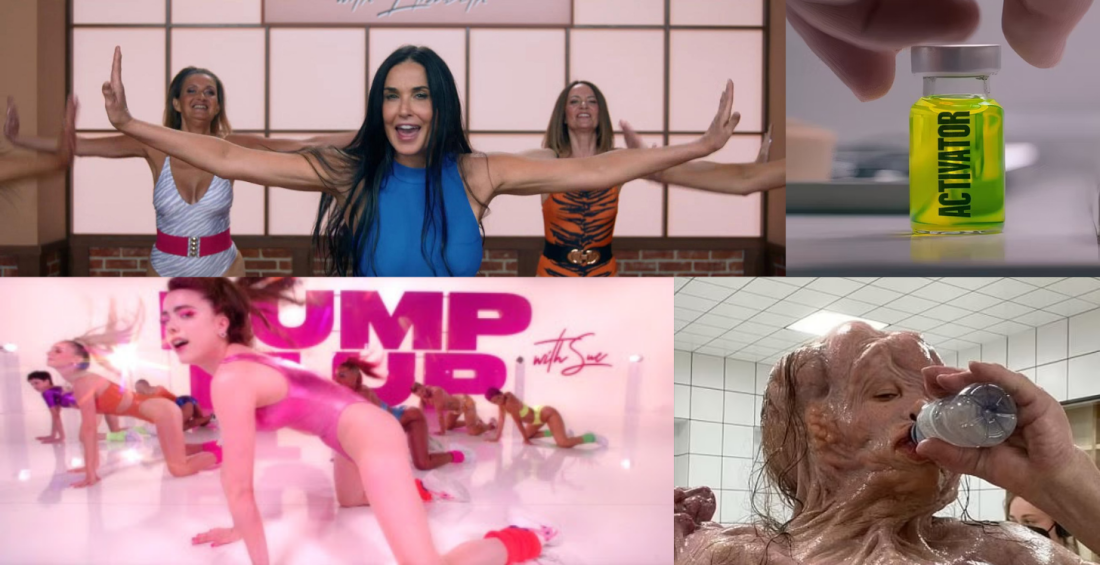
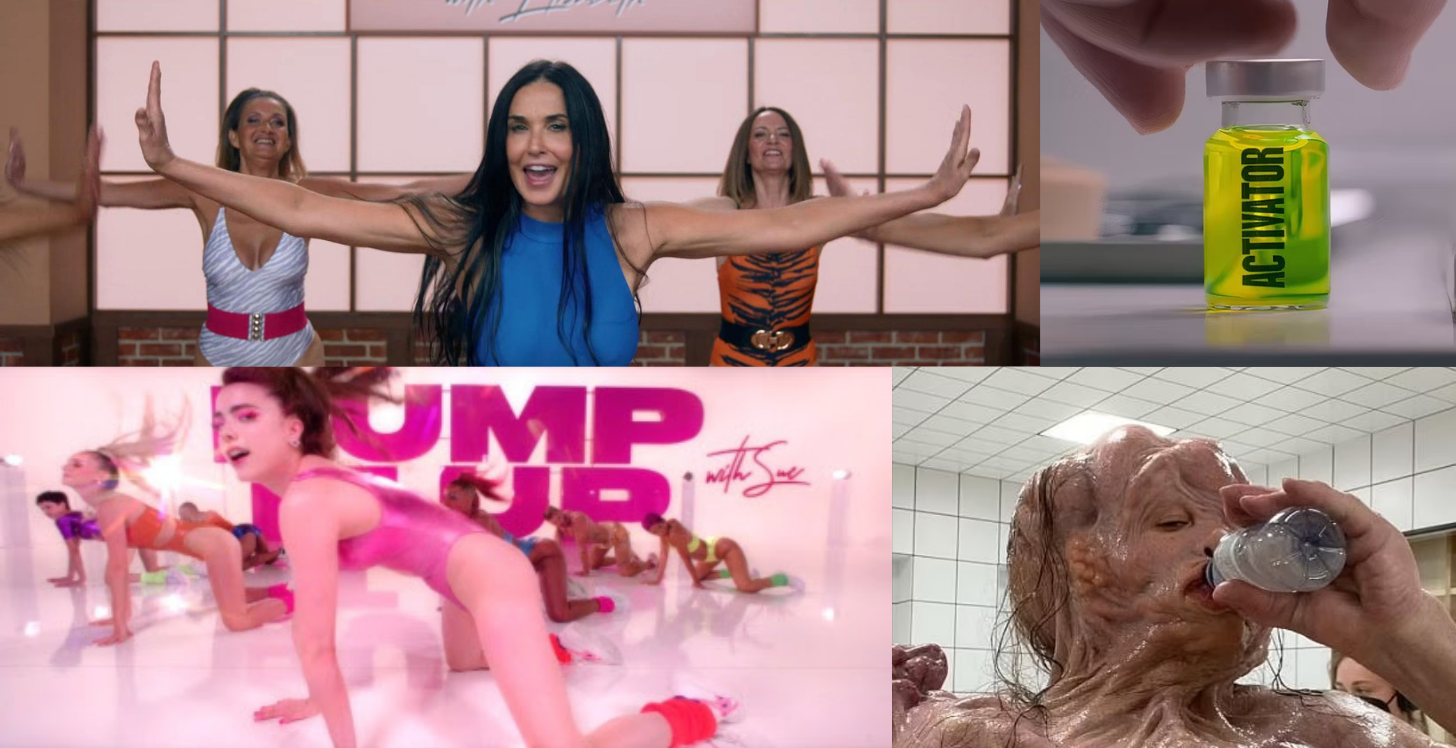
If you haven’t heard, The Substance (2024) is a revelatory film, intimately connecting us with the silent and self-inflicted savagery behind a femininity sculpted to appear pristine; devoid of flaws, pain, or madness. Coralie Fargeat doesn’t give us no-bush, no-blood femininity. She gives us a broken toe in a ballet slipper. Molars removed to accentuate the cheekbones. Silicone buried under muscle. And poison injected between the eyes.
The plot follows Elisabeth Sparkle (Demi Moore), a Jane Fonda–esque aerobics instructor who is fired for committing the crime of turning 50, discarded by an industry that equates desirability with youth and treats aging as failure. In a desperate attempt to regain relevance, she turns to a black-market treatment known only as “the substance,” which promises to transform her into a younger, hotter version of herself, one who can re-enter Hollywood on acceptable terms.
Enter Sue (Margaret Qualley), Elisabeth’s newly generated other self: vibrant, elastic, entitled, hyper-visible. The catch is strict and clinical: the two must alternate existence on a rigid schedule, sharing one body across time. One lives while the other disappears. Balance, says the mysterious purveyor of this toxic-waste-coded serum, is survival. But balance cannot hold.

Through Elisabeth’s experience, we enter a Hell where fame is love, and love is death and we understand it because we live there too. To be a woman is to deal internally with the grotesque, the messy, the unspoken violence of making oneself desirable. It is to see the body as meat: trimmed, chopped, and pounded for the consumption of others. Ain’t nothing demure about it.
So many moments of self-loathing are experienced alone. They are decidedly forgotten, pushed into the dark.
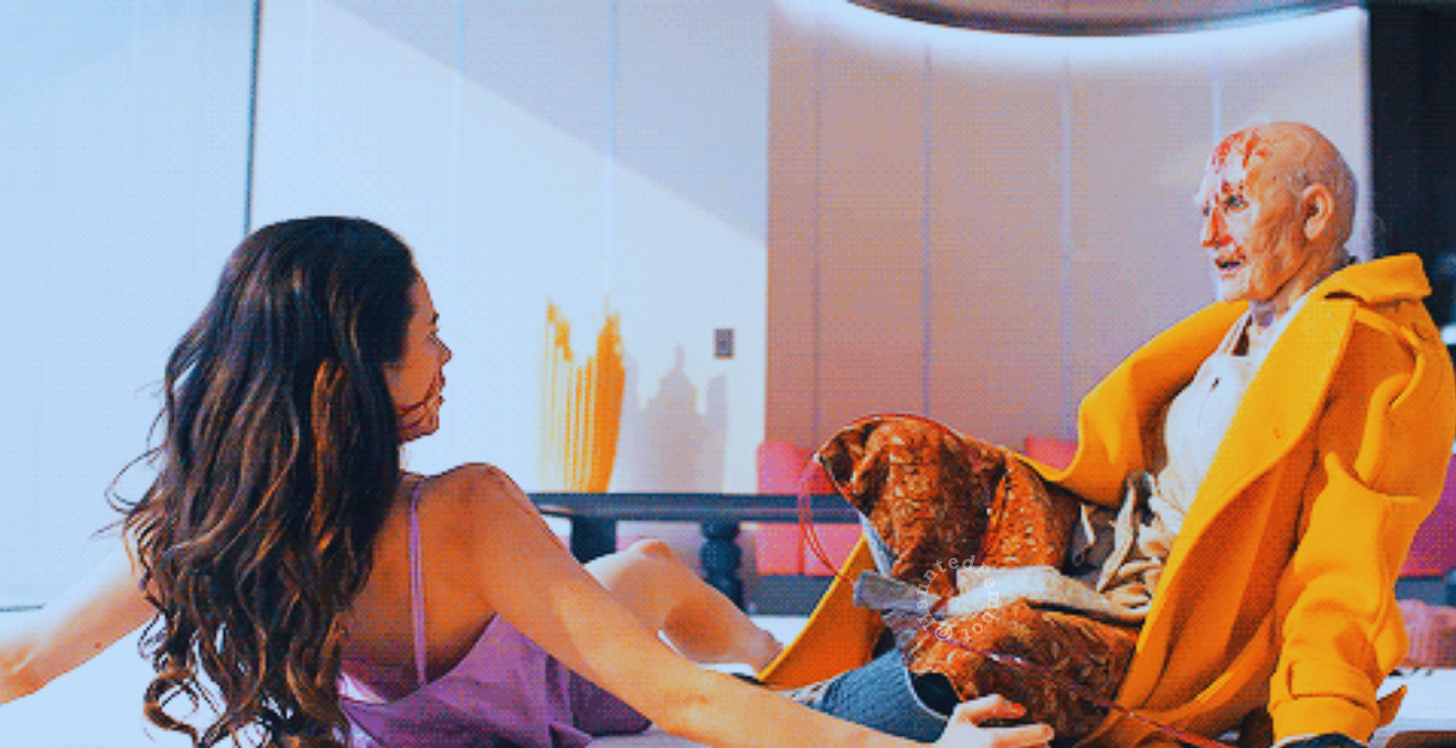
Fargeat’s film says, “No. You must look. You must know yourself.”
I found myself saying, “I guess that’s self-hatred too,” again and again as the film peeled back layer after layer of woman’s artifice, revealing the compulsions we normalize and the quiet negotiations we make with our own bodies.
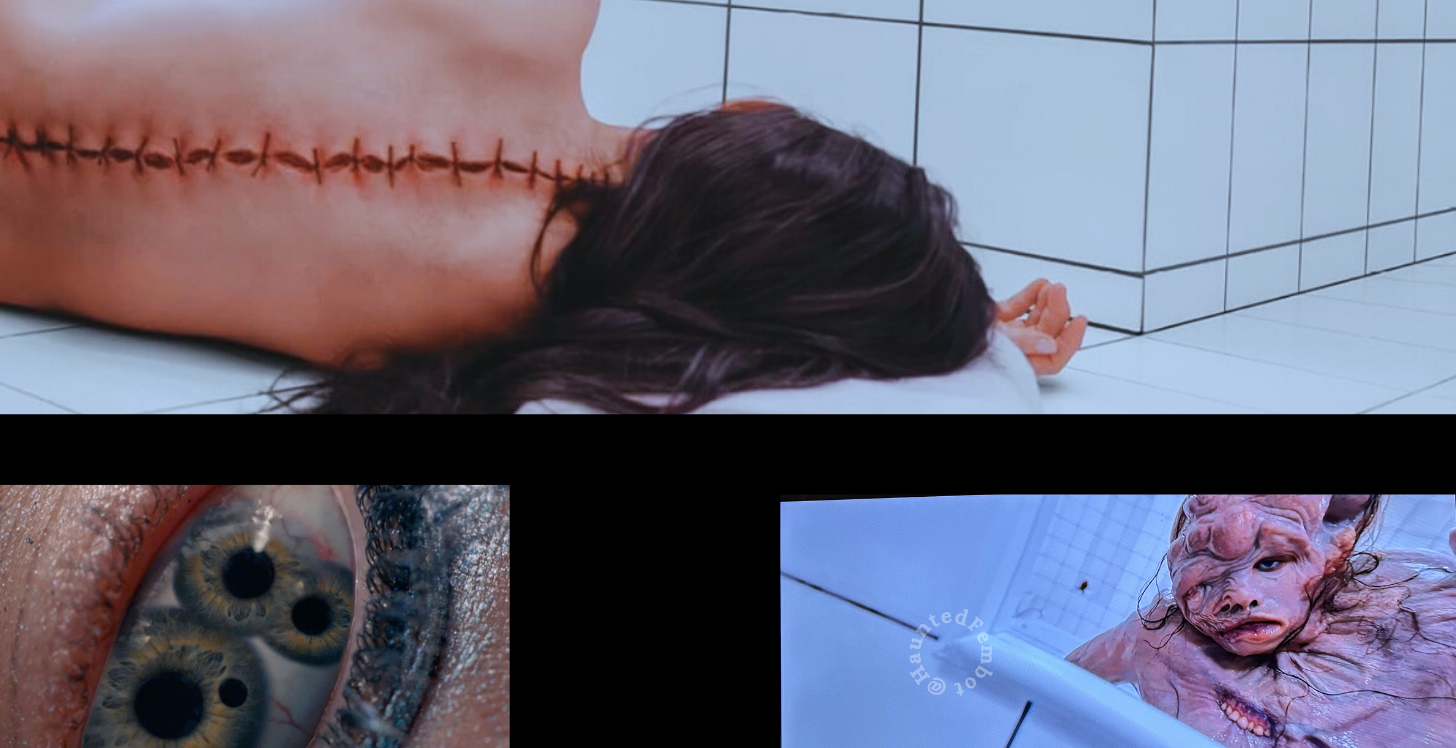
Campy, over-the-top, and told in the language of dreams, The Substance feeds us an important message with a spoonful of “oh my gawd, what am I even watching?! Did that face vagina just birth a titty?!” — it will change you.
This is not a movie. This is a spell.
 Haunted Fembot's Film Club